Assurance Without Limits: Rethinking QAIP - 7 October
Solutions
Five pillars, 30+ production modules — one data model beneath all of them.
Platform
Canonical data model, collect once report many
AI proposes, humans confirm, system records
ISO 27001, Cyber Essentials Plus, Azure & GCP
Cross-module analytics and board-ready exports
SAP, Workday, Oracle, REST APIs
Proprietary engine, evidence tracking, DQ scoring
AI-powered risk prediction and scenario analysis
Reads the evidence you already hold and keeps your conformance position current all year. AI proposes, your assessor confirms.
Open to Chief Audit Executives ahead of general release. No licence fee during the programme.
Board reporting
Internal assessment
Independence
External assessment
Global Internal Audit Standards
Resources
See what fragmented governance is costing you, and what one platform saves.
Not whether to report — whether your data can survive the scrutiny.
Latest thinking & analysis
What customers achieved
Original, evidence-led
Framework-by-framework
Courses & certification
Live and on-demand
recorded walkthroughs
Governance and sustainability
Industry recognition
SAMA, NCA, TPRM
CSRD, due diligence, asset ESG
CBAM, supply chain, Scope 3
CBAM, transition risk, resilience
NCA, SDAIA, sovereign deployment
Governance, data integrity, risk
Company
By people who have sat on the audit committee.
Explore our blogs for the latest insights, updates on ESG and sustainability trends, and new product features
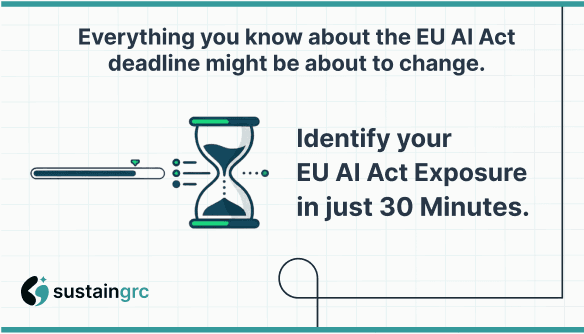
On 18 March 2026, EU Parliament committees voted to push back AI Act high-risk obligations. Boards breathed relief. They shouldn't have.
Read more
A $45bn commercial bank consolidated seven disconnected systems onto one governed platform and satisfied central-bank supervisors in under six months.
Four functions, four records of the same institution. How a systemically important commercial bank is consolidating enterprise risk, internal audit, data protection and continuity into one on‑premise environment — starting with the workflows still on spreadsheets.
Exposure is aggregate; the records are not. Why a diversified industrial group began with one obligation rather than a governance programme — deployed on sovereign cloud, on a data model the rest of the estate will inherit.
Regulators have moved the liability upstream. The defensible position is a record that links every claim to verified evidence.
The era of voluntary sustainability disclosure is over. For listed companies, the question is no longer whether to report — it's whether your data infrastructure can survive the scrutiny.
Discover how integrating ESG into Governance, Risk, and Compliance (GRC) and Enterprise Risk Management (ERM) brings purpose to operations and drives long-term value.
Understand the pivotal role of business leaders in driving sustainability, avoiding greenwashing, and aligning organisational goals for a truly sustainable future.
Explore the imperative for 'financial-grade' data quality in ESG reporting and how integrated platforms replace spreadsheets to ensure auditability and trust.
Explore the core components of ESG—Environmental, Social, and Governance—and their critical role in fostering sustainable, responsible, and ethical business practices.
A practical sequence for moving from disclosure scramble to evidence-linked reporting — obligations, controls, and records the assurers actually test.
Discover how Artificial Intelligence transforms ESG management through automated data integration and predictive risk modelling.
Learn how the 'Sustainability ERP' concept integrates ESG data with finance, risk, and operations to break down silos and drive strategic success.
Why the audit trail itself — not the report — is the defensible product that survives regulatory scrutiny.
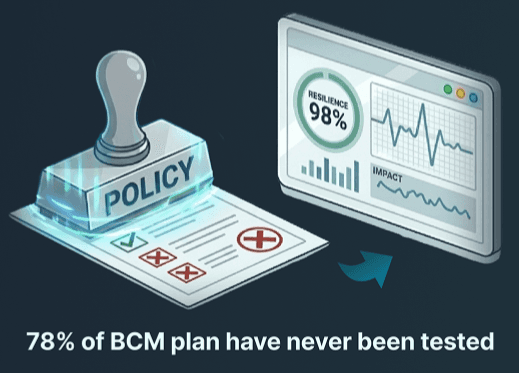
The Business Impact Analyses completed three years ago assumed a different supply chain, technology stack, and regulatory environment. Here's what regulators are finding.
AI in GRC is only as trustworthy as the data beneath it. Why AI-native, unified platforms beat bolt-on AI — and what regulators now expect.
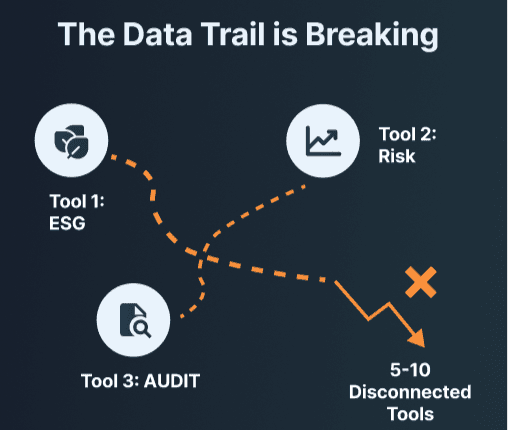
Across the GCC, climate, AI, cyber, third-party and board governance obligations are converging at once. Why one orchestrated model beats six disconnected tools.
A vendor register can't show what a failing supplier touches. Why third-party risk is a connected-data problem under DORA — and what AI-native, unified platforms change.