The Problem Isn't Investment. It's Relevance.
The Business Impact Analyses completed three years ago assumed a different supply chain, a different technology stack, and a different regulatory environment.
The RTOs and RPOs agreed at board level were based on best guesses rather than tested capabilities.
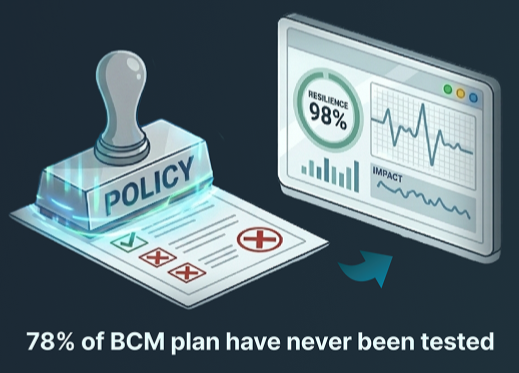
And the plans themselves sit in SharePoint reviewed annually, but never truly stress-tested against a scenario that wasn't pre-scripted.
The Blind Spots Regulators Keep Finding
Regulatory examinations and real incidents are exposing the same structural weaknesses across UK financial institutions.
Not gaps in effort gaps in how resilience is designed, validated, and maintained.
- BIA Currency
When was your last Business Impact Analysis updated not reviewed, but materially updated?
A BIA that predates your migration to cloud infrastructure or your adoption of a new core platform does not reflect your current risk exposure.
The FCA expects BIAs to represent how the organisation operates today not how it operated when the analysis was first conducted.
Mini Self-Check
- Has your BIA been materially updated in the last 12-18 months?
- Does it reflect current suppliers and systems?
- Does it map to real operational dependencies?
- RTO / RPO Credibility
Recovery Time Objectives are meaningless unless they've been validated through testing.
If your RTO is four hours, can you prove with evidence that recovery has been achieved within that window?
Or is it an inherited assumption?
The gap between stated and demonstrated capability is one of the most common regulatory findings.
Mini Self-Check
- Have recovery targets been tested under realistic conditions?
- Do you have evidence of performance?
- Have results led to changes?
- Supply chain depth
Tier 1 supplier mapping is no longer sufficient.
Your critical services depend on providers you don't directly manage cloud platforms, infrastructure layers, and shared services.
If your visibility stops at Tier 1, you're planning for the wrong failure mode.
Mini Self-Check
- Do you map beyond Tier 1 suppliers?
- Can you identify shared dependencies?
- Do you understand concentration risk?
- Cyber-BCM integration
The most likely trigger for a business continuity event is a cyber incident.
Yet in many organisations, cyber response and BCM operate in parallel not together.
The result: confusion at the exact moment clarity matters most.
Mini Self-Check
- Are cyber and BCM plans aligned?
- Do teams share escalation paths?
- Have you tested integrated scenarios?
- Plan exercisability
A 200-page plan is not a usable plan.
Under pressure, teams don't follow documentation they follow clarity.
The most effective organisations use short, role-specific playbooks tested under realistic conditions.
Mini Self-Check
- Are your plans actionable or theoretical?
- Are they tested under stress?
- Can teams execute without confusion?
How Many of These Apply to You?
If you recognised your organisation in three or more of these areas, your resilience framework is likely misaligned with current regulatory expectations.
From Blind Spots to Real-Time Visibility
SustainGRC turns fragmented resilience processes into a live, auditable view of your organisation's true exposure.
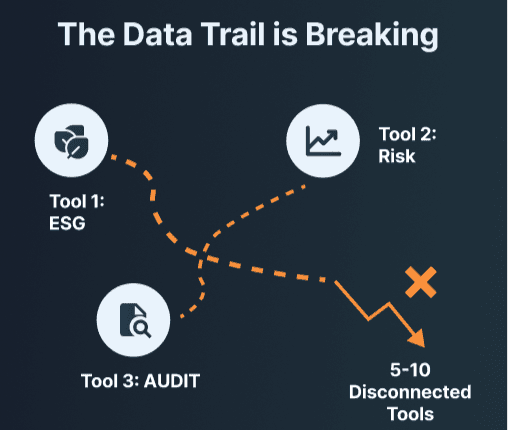
Instead of static documents and disconnected tools, you get a unified system that reflects how your business actually operates.